



Sewage Treatment Plants
Our range of sewage treatment plants provides an efficient and environmentally responsible solution for properties that are not connected to the mains sewer network. Designed to treat domestic wastewater to a much higher standard than a traditional septic tank, sewage treatment plants produce cleaner effluent that can typically be discharged to a watercourse or drainage field, subject to local regulations and site conditions.
Manufactured in the UK from high-quality rotationally moulded polyethylene, our underground sewage treatment systems are built for long-term performance, simple installation and dependable operation. Their durable ribbed construction offers excellent structural strength while the shallow dig design helps reduce excavation, making installation quicker and more cost-effective.
Whether you’re building a new home, replacing an ageing septic tank or upgrading an existing off-mains drainage system, our range includes sewage treatment plants suitable for domestic, agricultural and light commercial applications. If you’re unsure which model is right for your project, our experienced team is here to help you choose the most suitable solution.
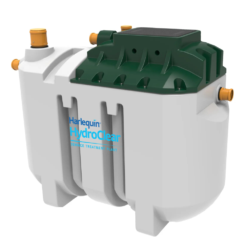
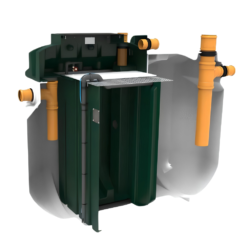
Sewage Treatment Plants
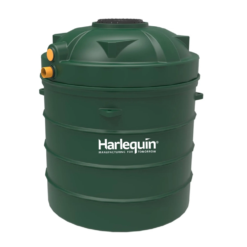
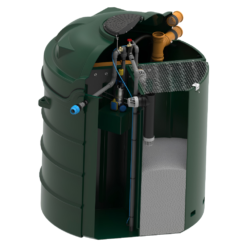
Sewage Treatment Plants
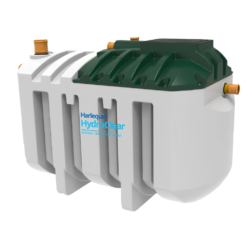
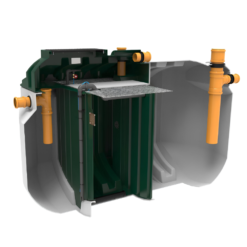
Sewage Treatment Plants
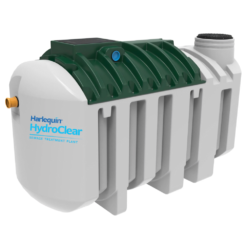
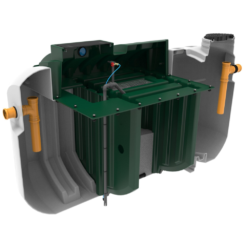
Sewage Treatment Plants
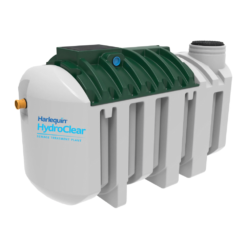
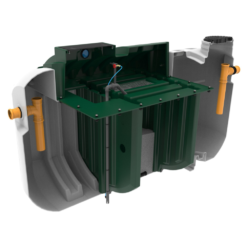
Sewage Treatment Plants
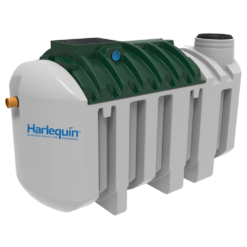
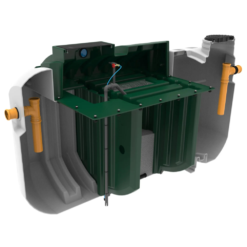
Harlequin HydroClear 12 Sewage Treatment Plant | 10-12 Person
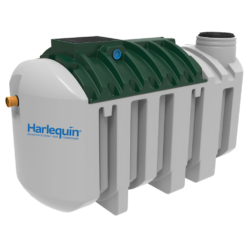
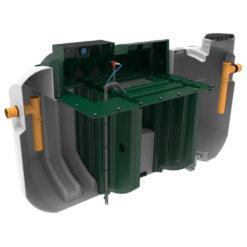
Sewage Treatment Plants
Sewage Treatment Plants
Sewage Treatment Plants
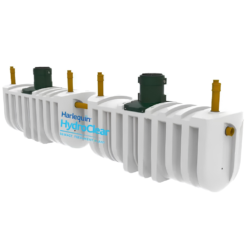
Harlequin HydroClear 30 Sewage Treatment Plant | 21-30 Person
Sewage Treatment Plants
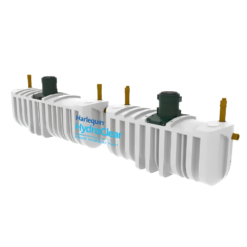
Harlequin HydroClear 40 Sewage Treatment Plant | 31-40 Person
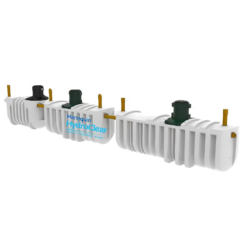
Sewage Treatment Plants
Harlequin HydroClear 50 Sewage Treatment Plant | 41-50 Person
How does a sewage treatment plant work?
Most domestic sewage treatment plants use naturally occurring bacteria to break down waste. Air is introduced into the treatment chamber to encourage the growth of beneficial bacteria, which remove pollutants before the treated water is discharged to a drainage field or watercourse, subject to local regulations.
What size sewage treatment plant do I need?
The correct size depends on the number of people using the property rather than the amount of wastewater produced. As a general guide, manufacturers recommend sizing the system based on the maximum occupancy or number of bedrooms. If you're unsure, our team can help you select the correct model.
What's the difference between a septic tank and a sewage treatment plant?
A septic tank stores wastewater and provides limited treatment before the liquid flows to a drainage field. A sewage treatment plant actively treats wastewater using biological processes, producing a much cleaner effluent that may be suitable for discharge to a watercourse, depending on your site and current regulations.
Do sewage treatment plants need electricity?
Yes. Most domestic sewage treatment plants require a continuous electrical supply to operate the air blower or compressor that supports the biological treatment process. They are designed to be energy efficient, with many systems costing only a few pounds per week to run.
How often does a sewage treatment plant need servicing?
Most manufacturers recommend an annual service to ensure the system continues to operate efficiently. Regular servicing helps identify wear, maintain treatment performance and can be a requirement to keep manufacturer warranties valid.
How often does a sewage treatment plant need emptying?
Most domestic systems require desludging approximately once every 12 months, although this depends on the size of the plant, occupancy and usage. Your service engineer can advise whether more or less frequent emptying is required.
Can a sewage treatment plant discharge into a ditch or stream?
In many cases, yes. A correctly installed and maintained sewage treatment plant that complies with current standards may discharge treated effluent to a watercourse, subject to the Environment Agency's General Binding Rules and any site-specific requirements. Always check that your installation meets the latest regulations.
Can I replace my septic tank with a sewage treatment plant?
Yes. Many homeowners choose to replace older septic tanks with sewage treatment plants to improve wastewater treatment and comply with current environmental requirements. In some cases, the existing excavation or pipework may be reusable, although every installation should be assessed individually.
How long does a sewage treatment plant last?
A quality sewage treatment plant manufactured from durable polyethylene and correctly maintained can provide many years of reliable service. Many modern systems have an expected design life of 20 years or more, with routine servicing helping to maximise their lifespan.
Do I need planning permission for a sewage treatment plant?
In many cases, planning permission is not required when replacing an existing system, but Building Regulations and the Environment Agency's General Binding Rules still apply. Requirements vary depending on your property and where the treated effluent is discharged, so it's always worth checking before installation.
Can I install a sewage treatment plant myself?
While some experienced groundworkers may install the tank itself, we strongly recommend using a qualified installer. Correct excavation, backfilling, pipe gradients, electrical connections and commissioning are all essential for reliable operation and to maintain the manufacturer's warranty.