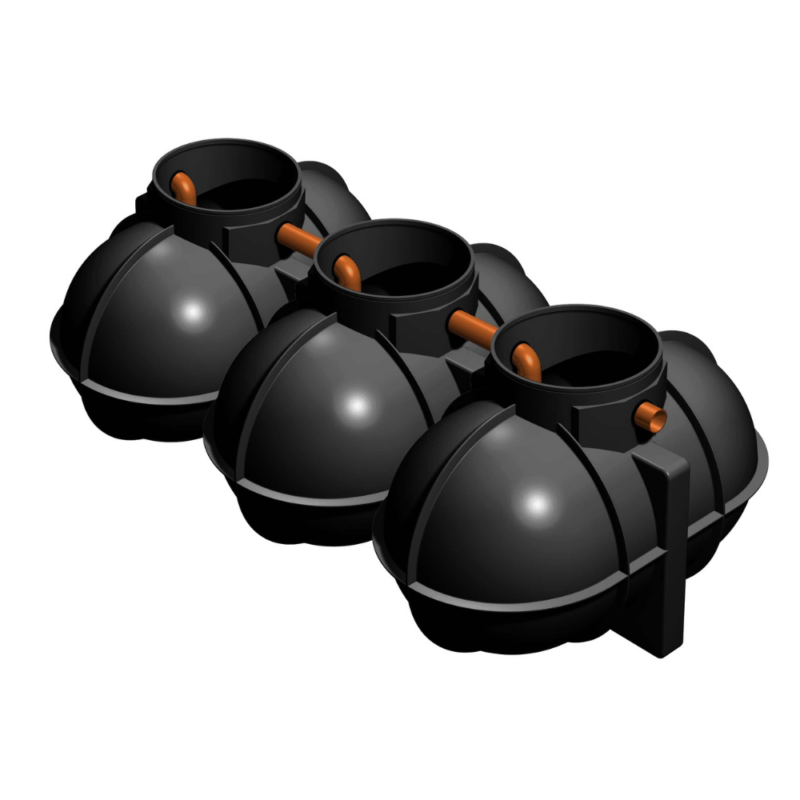

Wastewater Solutions

Last updated: September 2026

Reviewed by: Online Tank Store Technical Team

Choosing the right wastewater system is essential for safely and effectively managing wastewater from your property. At The Online Tank Store, we offer a comprehensive range of wastewater solutions to suit a variety of properties, site conditions and requirements.

From cesspools and septic tanks to pump stations and sewage treatment plants, our range provides reliable solutions for properties that aren’t connected to mains drainage. Whether you need a simple wastewater storage solution or a complete treatment system, our buyers guide can help you understand the options available and choose the right solution for your needs.
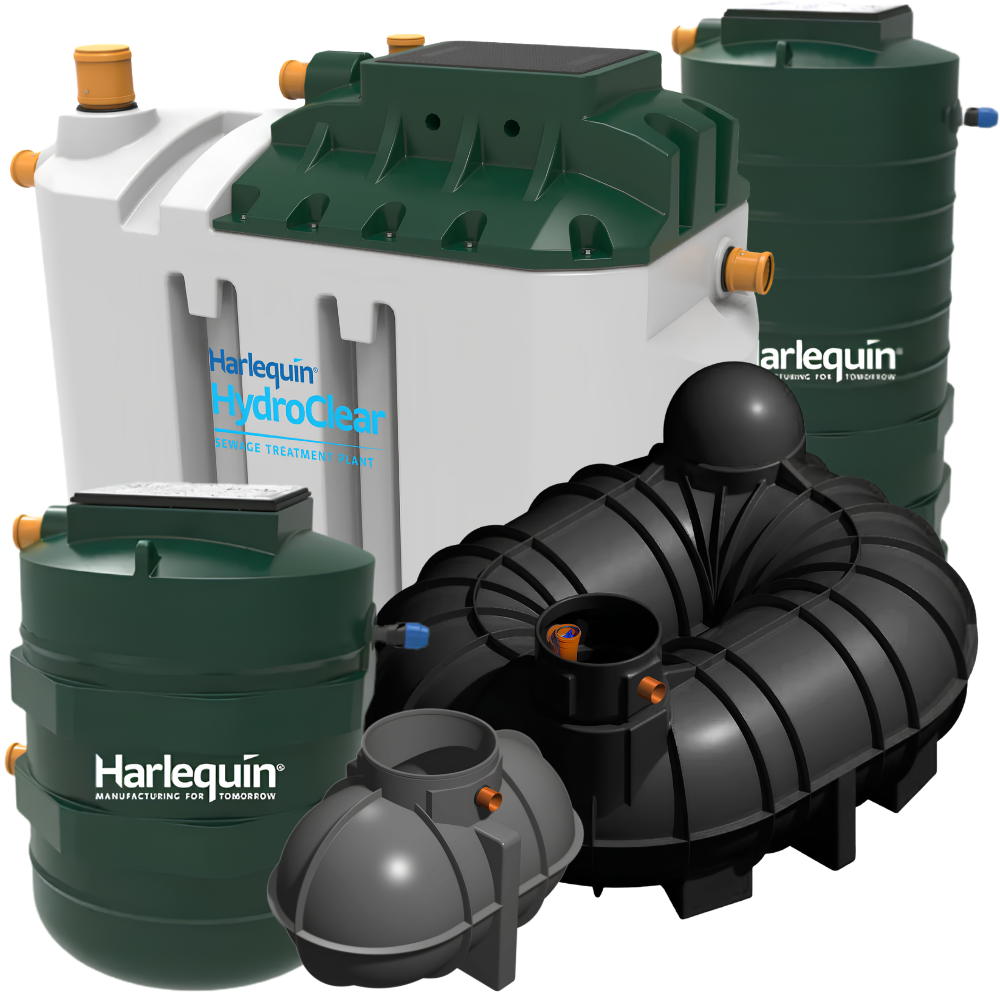
What are wastewater systems and why might I need one?

Wastewater systems are designed to safely collect, treat, store and dispose of wastewater from homes and other properties. They are particularly important for properties that are not connected to the mains sewer network, such as rural homes, holiday lets, campsites, commercial premises and properties in remote locations.

There are several types of wastewater systems available, including septic tanks, sewage treatment plants, cesspits and pump stations. Each system works differently and is suited to different site conditions and requirements. The right option will depend on factors such as the number of people using the property, the amount of wastewater produced, ground conditions and how the treated or stored wastewater can be discharged.

A suitable wastewater system provides a reliable, hygienic and environmentally responsible way to manage wastewater, while helping your property comply with relevant regulations. Choosing the correct system from the outset can also help reduce maintenance requirements and ensure effective long-term performance.

Quick Answer Box

The Requirement System to consider
✔ No mains drainage, suitable drainage field →  Septic tanks
✔ Higher level of wastewater treatment required →  Sewage treatment systems
✔ No suitable discharge arrangement; sealed storage required → Cesspool
✔ Wastewater cannot flow by gravity →  Pump stations (installed as part of an installation)
✔ Commercial or agricultural washdown water → Washdown Separator
Final suitability depends on site conditions, system design and applicable regulations.

Quick Facts

✓ Our range currently available for everything from single households to commercial sites accommodating up to 50 people

✓ Suitable for domestic, agricultural, commercial and industrial applications

✓ The Harlequin Hydroclear range has the market leading pollutant removal – 97.5% 

✓ We can arrange free site visits to ensure we find the right system for you

✓ All sewage treatment plants come with an external blower for optimal performance 

Types of wastewater systems

There are several wastewater systems available, each designed to meet different property and site requirements. Cesspools, septic tanks, sewage treatment plants and pump stations each provide a different approach to wastewater storage, treatment and disposal.

From simple storage solutions for properties without mains drainage to advanced treatment systems for domestic and commercial applications, choosing the right system depends on factors such as occupancy, wastewater volumes, site conditions and discharge requirements.

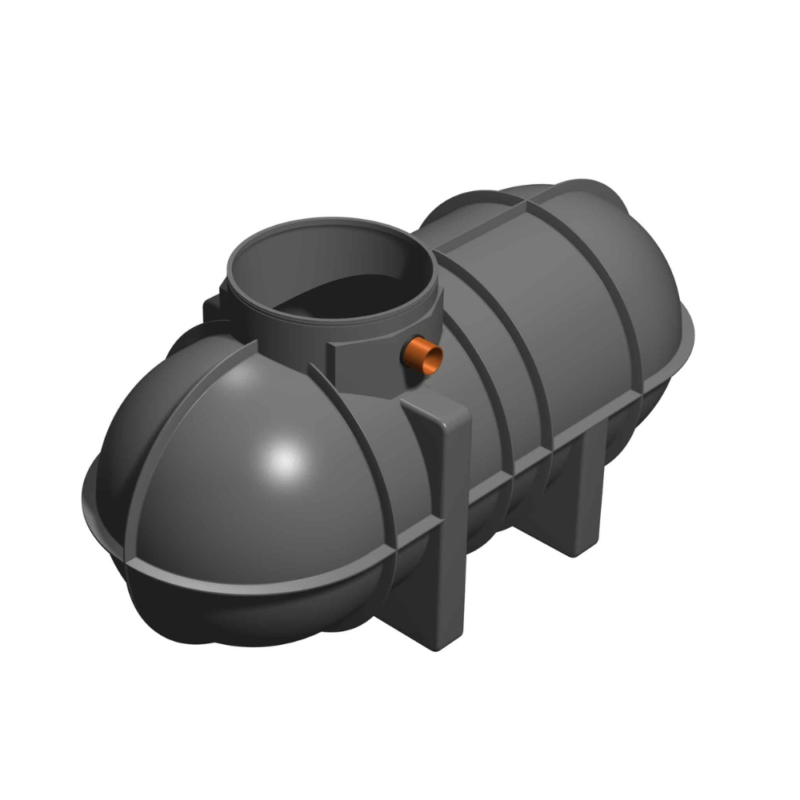
Cesspools

Suitable for: the storage of effluents and most chemicals used in their treatment, and are specifically suitable for ELSAN chemical toilet waste.

View Cesspools

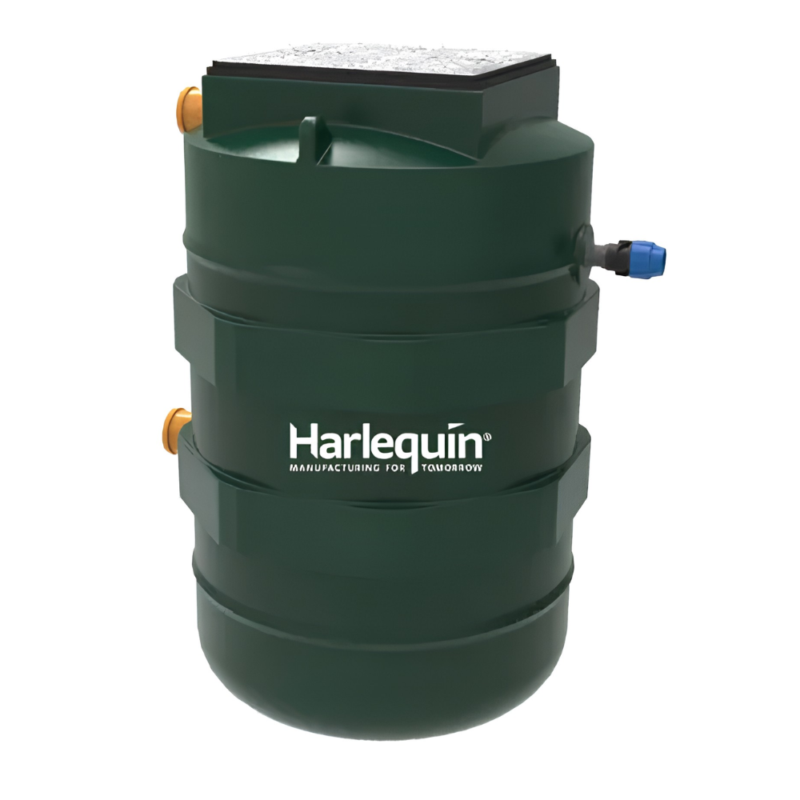
Pump stations 

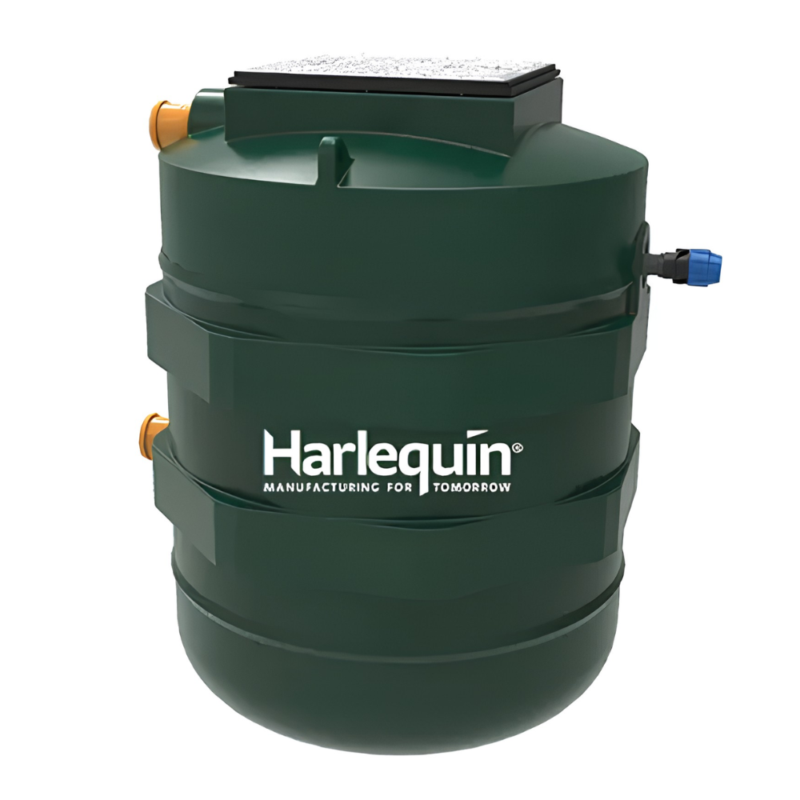
1100 Pump station Main

Suitable for: Ideal for properties where wastewater cannot flow away by gravity alone. Pump stations collect and temporarily store wastewater before pumping it to a higher-level drainage system, treatment plant or discharge point.

View Pump stations

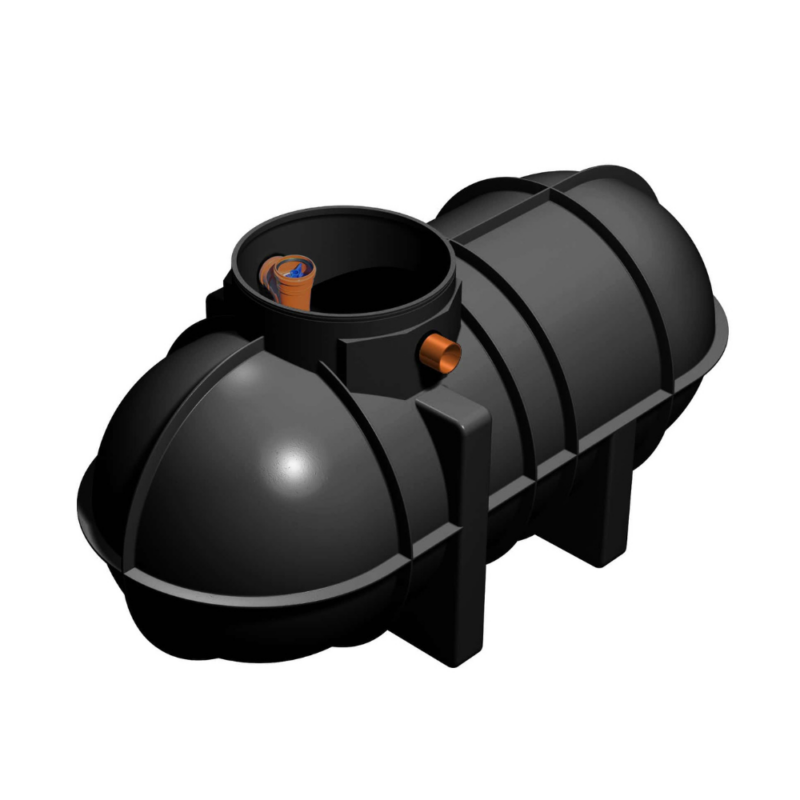
Septic tanks 

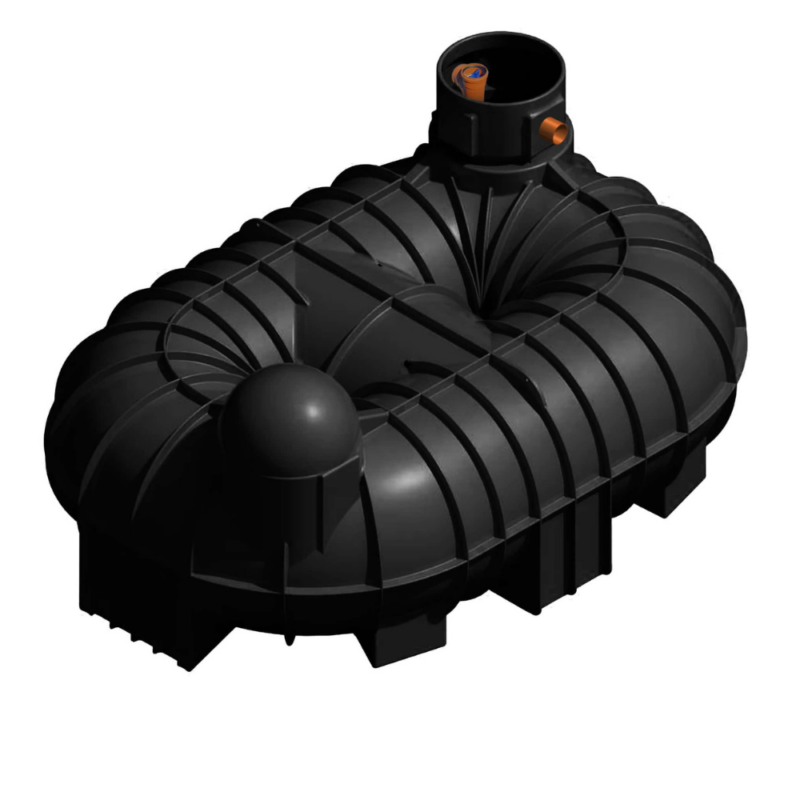
2600L Septic Tank

Suitable for: Ideal for properties without access to a mains sewer connection, but with a suitable drainage field for the discharge of treated effluent.

View Septic tanks

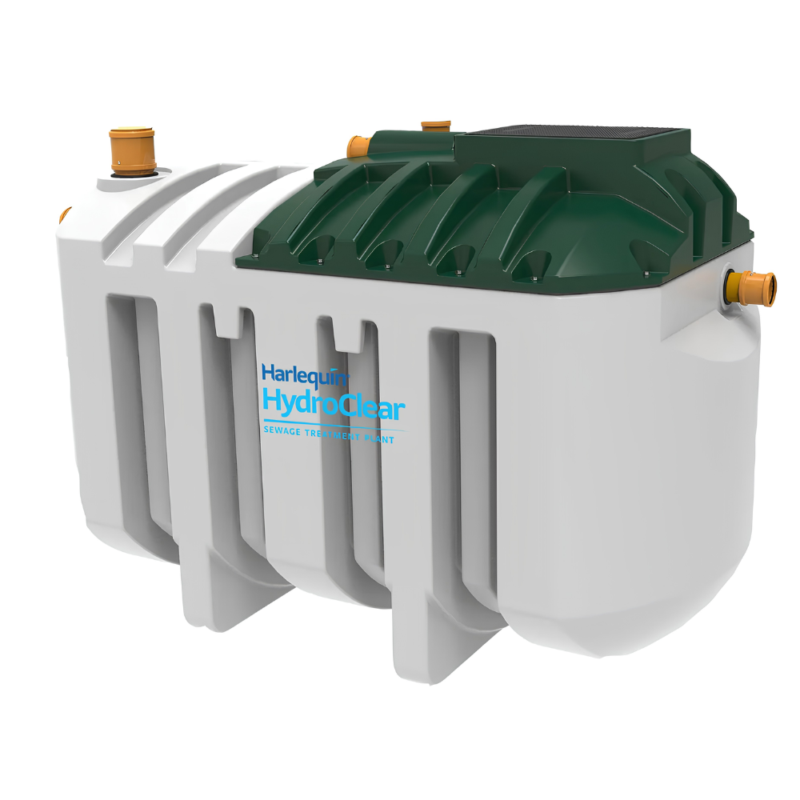
Sewage treatment plants 

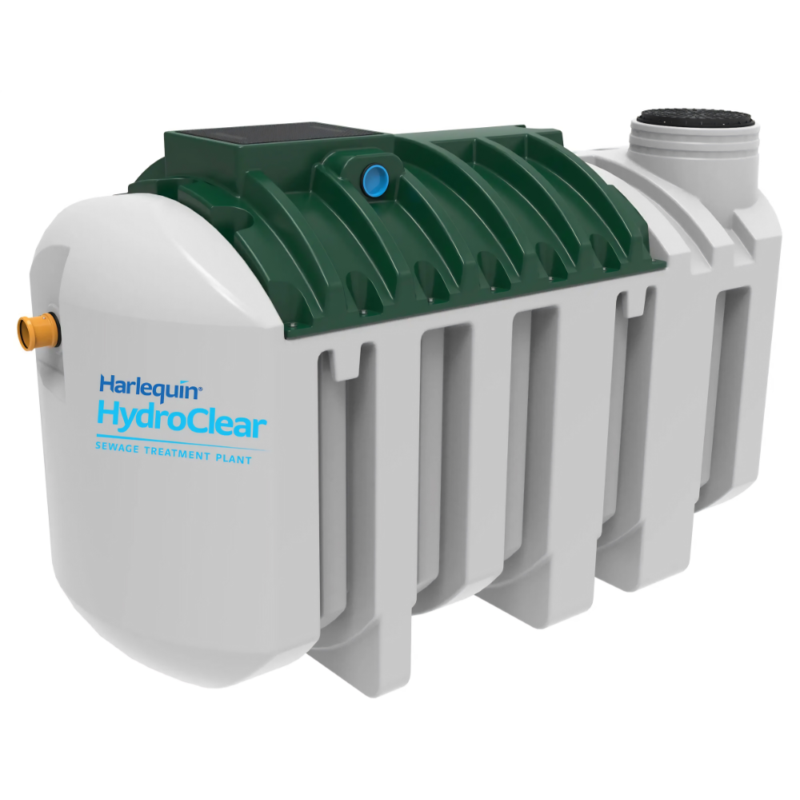
Hydroclear 9 MAIN

Suitable for: Ideal for properties without access to a mains sewer connection, where a higher level of wastewater treatment is required before the treated effluent can be discharged to a suitable watercourse or drainage field.

View Sewage treatment plants

Washdown separators 

Suitable for: Ideal for commercial and industrial sites where washdown water may contain oils, fuels, silt or other contaminants. Washdown separators help treat and separate pollutants before wastewater is discharged to a suitable drainage system or watercourse.

View Washdown separators

📖 FURTHER READING

Not sure which wastewater system you need?

Choosing between a septic tank, sewage treatment plant or cesspool can be confusing. Our simple flowchart helps you to understand which option may be suitable for your requirements.

Read our Wastewater Selection Guide

Cesspools

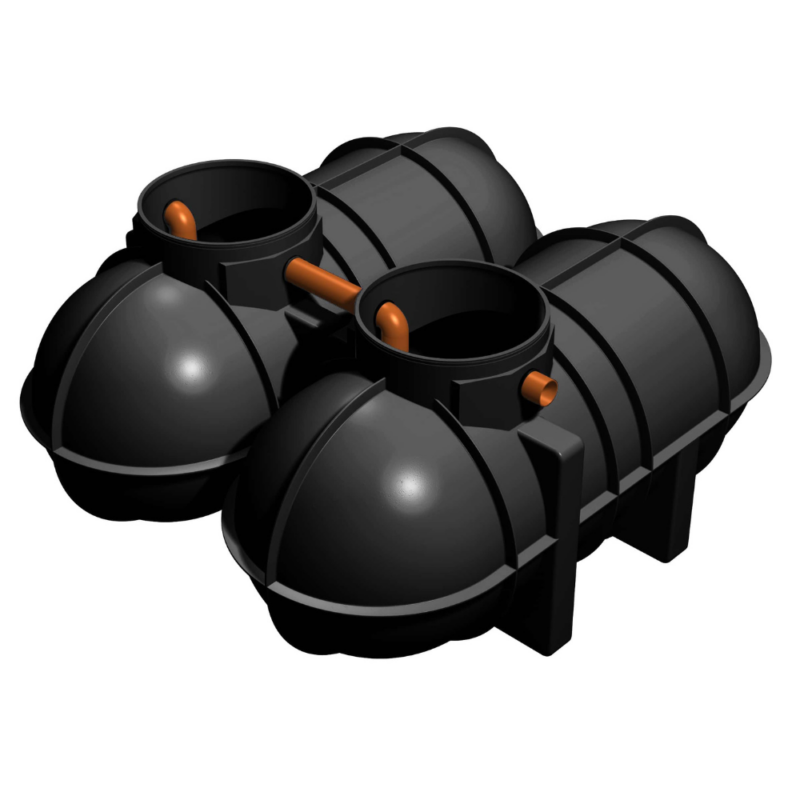
Cesspools are sealed underground storage tanks used to collect and store wastewater or effluent. Unlike septic tanks and sewage treatment plants, cesspools do not treat wastewater or have a discharge outlet. They must be emptied regularly by a registered waste carrier and must not leak or overflow.

Cesspools are suitable for the storage of effluents and most chemicals used in their treatment, and are specifically suitable for ELSAN chemical toilet waste.

Important: Choosing the correct cesspool capacity

Cesspools are available in a range of capacities to suit different applications. However, not all sizes are suitable for use as the primary wastewater storage system for a domestic property.

For new domestic cesspool installations in England, the minimum required capacity is 18,000 litres for two users, plus an additional 6,800 litres for each extra user.

Smaller cesspools may be suitable for specialist, commercial or other approved applications, depending on their intended use.

We recommend confirming your installation requirements with your local authority or a qualified drainage specialist before purchasing.

For further information, please refer to the official government guidance on cesspools.

Capacity options:

Cesspool capacity options
1,800 Litres
2,600 Litres
3,400 Litres

Lid options:

Pedestrian duty lockable cover

This is suitable for when the cesspool is located where no vehicles will need to pass over the tank. It is suitable to withstand pedestrians walking on the lid and is rated to carry a weight up to 200kg.

The underground cesspools are designed for shallow-dig installation with a pea gravel surround. However, the installation can be modified to allow vehicles to drive over the tank where required.

Light vehicle cover 

This strengthened lid can withstand a passenger car type vehicle driving over it and is rated to carry a weight up to 600kg. This means that the lid needs to be protected from trucks and heavy goods vehicle traffic.

Although the vehicle lid itself is designed to withstand a load of up to 600 kg, the tank itself is not designed to withstand vehicle loading. The vehicle lids are primarily intended to provide access to the tank when it needs to be emptied or cleared by a vehicle.

View all Cesspools here

Optional extras: 

High-level alarms – are optional extras, these are mains operated and warns you when the tank needs emptying 

Telescopic extension risers – allow the depth of the tank to be increased to between 400 and 750mm. This can be easily trimmed by using a hand saw. 

Backflow Non-return valves – are used to prevent flooding of tanks or buildings. From effluent that may travel back up the pipework system.

Pump stations 

Pump stations provide a solution for moving sewage and wastewater where gravity is not possible. Pump stations are installed underground and pumps wastewater to a higher-level sewer, treatment plant or other suitable discharge point. 

Capacity options:

Pump station capacity Example occupancy
450 Litres Single person dwelling
800 Litres For 1 – 5 persons
1,100 Litres For 1 – 7 persons
1,550 Litres For 1 – 7 persons
2,700 Litres  For 1 – 18 persons
3,200 Litres  For 1 – 21 persons

Pump stations are offered in 3 pump variations: 

Effluent pumps 

these are drainage pumps and are suitable for following a treatment plant, septic tank or moving surface water. These ones are not suitable for pumping raw sewage. 

Sewage pumps 

these are solids handling vortex pumps , they pump sewage up to a treatment plant or other suitable discharge point. It is important that ONLY sewage and toilet paper are flushed when using these pump stations. 

Grinder pumps 

these are also solids handling pumps for sewage, however, these are more accommodating for sites where you have less control over what is being flushed. For example, public toilets, campsites or rental properties.

You have the choice of single or twin pumps: 

Single pumps

Single pump stations come with one submersible pump with integrated float switch. It is recommend to have a high level alarm fitted – this will indicate when the water or sewage limit has risen above the safe operating levels. 

Twin pumps

Twin pump stations come with 2 submersible pumps and a high-level alarm as standard. The twin pump station provides increased reliability and continued operation should one pump experience a fault. (all pump sizes, other than the 450 Litre, have the option of a twin pump)  

View all Pump stations here
1550 Pump station - main

Optional extras: 

High-level alarms – are optional extras for the single pumps, however, these come as standard with the twin pumps.

The high-level alarm indicates when the water or sewage limit has risen above safe operating levels 

📖 FURTHER READING

How Does A Pump Station Work?

Discover the key components of a wastewater pump station, how they work together and the differences between single and twin pump systems.

Read our Pump Station Guide

Septic tanks 

Septic tanks provide an effective solution for managing sewage, treating wastewater while retaining solid waste. Where mains drainage is unavailable, a septic tank connected to a soakaway system offers a reliable and practical wastewater solution.

Capacity options:

Septic tank capacity Example occupancy
2,600 Litre For up to 4 person
3,400 Litre For up to 8 person
4,400 Litres For up to 14 person
5,200 Litres For up to 18 person
6,800 Litres For up to 26 person
8,400 Litres For up to 36 person
10,000 Litres For up to 45 person

Lid options:

Pedestrian duty lockable cover

This is suitable for when the Septic tank is located where no vehicles will need to pass over the tank. It is suitable to withstand pedestrians walking on the lid and is rated to carry a weight up to 200kg.

The underground Septic tanks are designed for shallow-dig installation with a pea gravel surround. However, the installation can be modified to allow vehicles to drive over the tank where required.

Light vehicle cover 

This strengthened lid can withstand a passenger car type vehicle driving over it and is rated to carry a weight up to 600kg. This means that the lid needs to be protected from trucks and heavy goods vehicle traffic.

Although the vehicle lid itself is designed to withstand a load of up to 600 kg, the tank itself is not designed to withstand vehicle loading. The vehicle lids are primarily intended to provide access to the tank when it needs to be emptied or cleared by a vehicle.

View all Septic Tanks here
8400 litre septic tank underground

Optional extras: 

Telescopic extension risers – allow the depth of the tank to be increased to between 400 and 750mm. This can be easily trimmed by using a hand saw. 

Sewage treatment plants 

Sewage treatment plants are designed to treat domestic wastewater to a much higher standard than a traditional septic tank, the sewage treatment plant produce cleaner effluent that can typically be discharged to a watercourse or drainage field, subject to local regulations and site conditions.

Tank types: 

Harlequin CAP range 

These sewage treatment plants are perfect for the treatment of sewage waste and suitable for discharge to both watercourse or drainage field. These come in a compact design and comes with a movable tank compressor box. These have a pollutant removal percentage of 96.2%. 

Harlequin HydroClear range 

Hydroclear systems come with an energy efficient, super quiet treatment reactor to clean sewage waste to an extremely high degree suitable for discharge to both watercourse and drainage fields. Easy installation and consistent results. Pollutant removal level percentage of 97.5% 

Capacity options:

Sewage Treatement Plant capacity Example occupancy
CAP & Hydroclear 6 For 1 – 6 person
CAP & Hydroclear 9 For 7 – 9 person
CAP & Hydroclear 12 For 10 – 12 person
CAP 15 For 13 – 15 person
CAP 18 For 16 – 18 person
Hydroclear 30 For 21 – 30 person
Hydroclear 40 For 31 – 40 person
Hydroclear 50 For 41 – 50 person

Outlet Options:

Gravity (Standard) 

For when the final effluent runs downhill to the water course or drainage field

Integral pumped outlet  

For when the effluent needs to be pumped uphill to a watercourse or drainage field.

📖 FURTHER READING

How Does A Sewage Treatment Plant Work?

Discover the key components of a Sewage Treatment plant.

Read our Sewage Treatment Guide

Optional extras: 

Low pressure alarm – provides an early warning if the blower pressure drops, helping to identify issues before they affect the performance. 

Washdown Separators

Washdown separators are designed to remove silt, sediment, oils and hydrocarbons from contaminated wash water before it enters the drainage system. 

Our washdown separators are suitable for a wide range of commercial and agricultural applications, including:

Capacity options:

Washdown seperator capacity Example use
1,000 – 2600 Litres Single jet wash and hand wash applications
2,600 – 5400 Litres Commercial car wash and vehicle cleaning applications
5,400 – 7,800 Litres Brush wash and agricultural equipment cleaning
7,800 – 20,000 + Litres Gantry wash, truck wash and quarry wheel wash applications

Lid options: 

Pedestrian duty lockable cover

This is suitable for when the washdown separators is located where no vehicles will need to pass over the tank. It is suitable to withstand pedestrians walking on the lid and is rated to carry a weight up to 200kg.

The underground washdown separators are designed for shallow-dig installation with a pea gravel surround. However, the installation can be modified to allow vehicles to drive over the tank where required.

Light vehicle cover 

This strengthened lid can withstand a passenger car type vehicle driving over it and is rated to carry a weight up to 600kg. This means that the lid needs to be protected from trucks and heavy goods vehicle traffic.

Although the vehicle lid itself is designed to withstand a load of up to 600 kg, the tank itself is not designed to withstand vehicle loading. The vehicle lids are primarily intended to provide access to the tank when it needs to be emptied or cleared by a vehicle.

View all Washdown Seperators here
5400 Washdown

Optional extras: 

Telescopic neck – is used to extend the existing turret by approximately 300mm to 800mm for deeper installations.

Silt alarm – which monitors silt levels within the separator and provides an early warning when maintenance or emptying is required, helping maintain efficient system performance 

Hydrocarbon alarm – which monitors oil and hydrocarbon levels within the separator, providing an early warning to help protect the drainage system and support planned maintenance

What regulations apply to wastewater systems in the UK?

Choosing the right wastewater system involves more than selecting a suitable tank. Installations must comply with relevant environmental and building regulations to ensure wastewater is collected, treated and discharged safely.

In England, septic tanks and sewage treatment plants are subject to the Environment Agency’s General Binding Rules. These set out requirements for wastewater discharge, including where treated effluent can be released and when an environmental permit may be necessary.

Septic tanks must not discharge directly into surface water, such as rivers or streams. Site conditions, drainage arrangements and the intended use of the system should all be considered before installation.

Regulations differ across England, Scotland, Wales and Northern Ireland, so it is important to check the requirements applicable to your location.

For further information, visit the official GOV.UK guidance on septic tanks and sewage treatment systems here.

Explore our Wastewater Guides

Want to learn more? Explore our dedicated guides for practical advise on choosing, understanding and maintaining wastewater systems. 

📖 How Does a Sewage Treatment Plant Work?

Understand how sewage treatment plants process wastewater and the key components involved.

Read Guide

📖 How Does A Pump Station Work?

Explore the essential components of a wastewater pump station and how they work together.

Read Guide

📖 Which Wastewater System Do I Need?

Compare septic tanks, cesspools and sewage treatment plants to help identify the right solution for your property.

Read Guide

📖 Why Choose a Harlequin Sewage Treatment Plant?

Discover the Harlequin range, its key features and the benefits of choosing a Harlequin treatment system.

Read Guide

Need advice before ordering?

Our experienced team can help you select the best product for your application.

01308 479960

Browse Products

Still deciding? View our full range of tanks and accessories here.

Browse products

Request A Quote

Need delivery pricing or a bespoke solution? Fill out our simple contact form for a quick response.

Contact Us