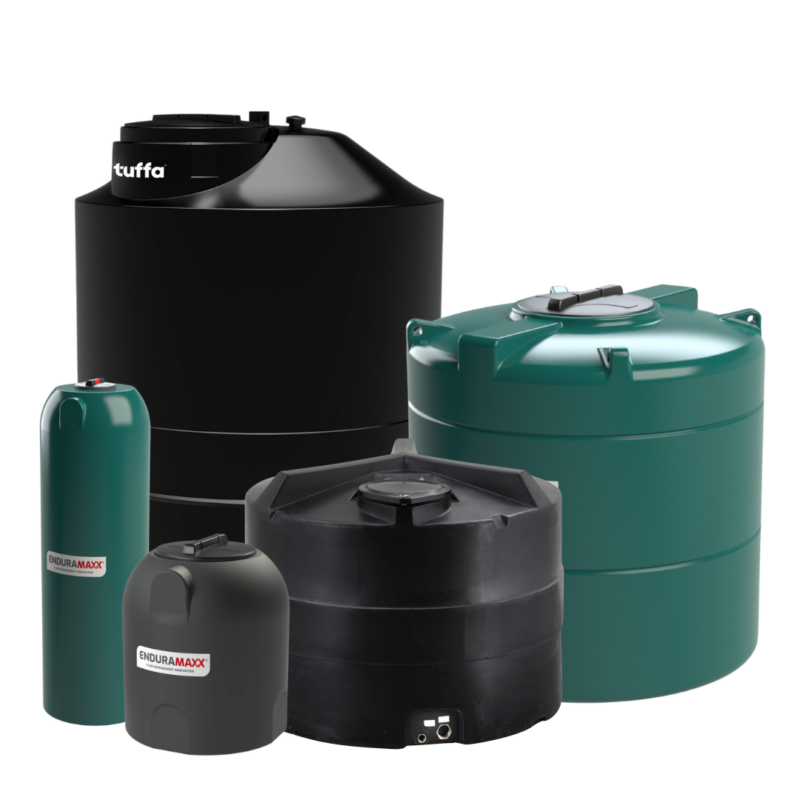
Water tank buyers guide

Last updated: August 2026

Reviewed by: Online Tank Store Technical Team

At Online Tank Store, we have supplied thousands of water tanks across the UK for domestic, commercial, agricultural and industrial applications. Whether you’re storing drinking water, collecting rainwater, supplying livestock or transporting water in a vehicle, choosing the right tank is essential.

With decades of combined experience and real-life experience of our products, we’ve created this guide to share our practical experience and answer the questions customers ask us every day. It explains how to choose the right tank, understand common terminology, calculate the size you need and avoid costly mistakes.

Looking for something specific? Use the quick links below to jump straight to the section you need.

Water Tanks At The Online Tank Store

Quick Answer Box

✔ Drinking Water → Potable water tanks

✔ Water Transport → Baffled water tanks

✔ Garden watering → Water butt

✔ Rainwater → Rainwater harvesting tanks

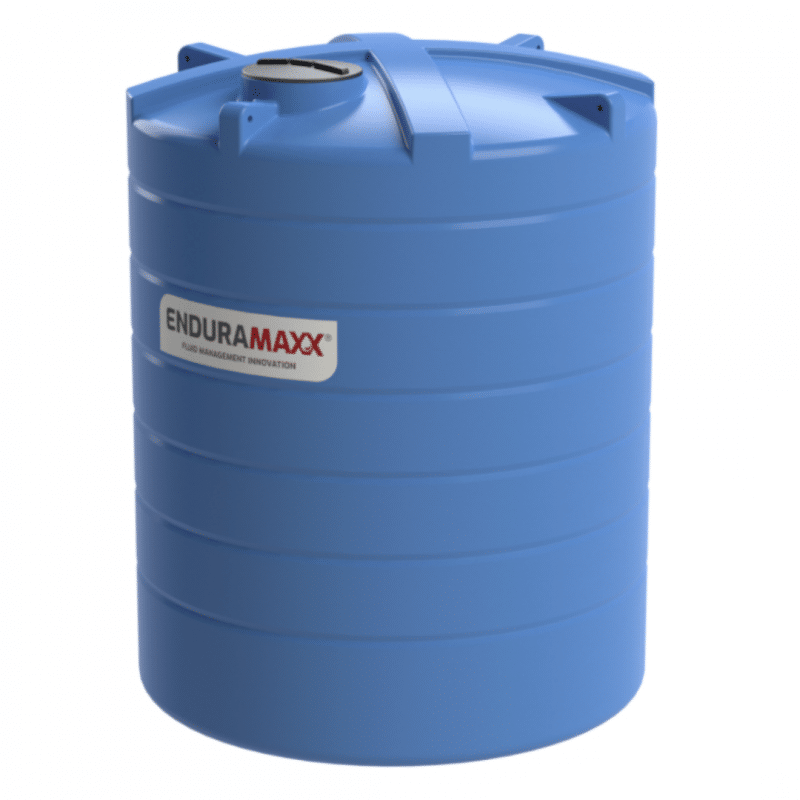
✔ Agriculture → 1000 Litre + tanks

✔ Underground Water Tanks → Underground water tanks

✔ Window Cleaning → Window cleaning water tanks

✔ Towable water tanks → Trailed Water Bowsers

✔ Mains water connection → Cat 5 AB Air gap tanks

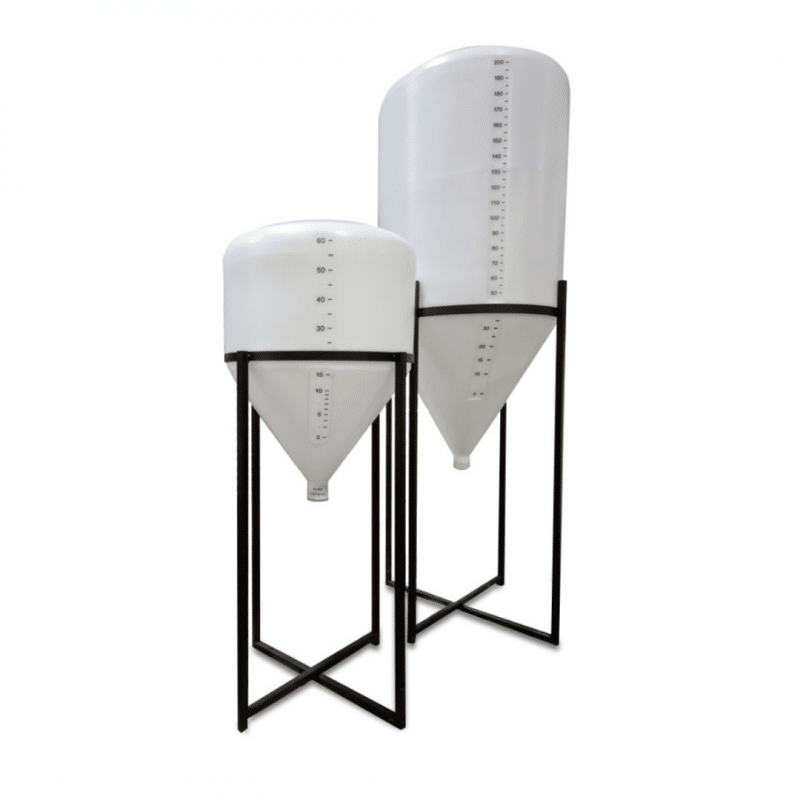
✔ Complete drainage tank  → Conical Tanks

What is a water tank?

A water tank is a container designed to safely hold water for use at a later point. Used across domestic, agricultural, commercial and industrial applications, water tanks provide a reliable supply of water wherever it is needed. Depending on the application, they can be used to store drinking water (potable water), non-potable water, rainwater, greywater and a range of other compatible liquids.

Water tanks play a crucial but understated part in so many different processes and applications.

  • Rainwater harvesting
  • Livestock watering
  • Emergency water storage
  • Fire protection
  • Manufacturing and construction processes
  • Buildings without consistent mains water supply

The tanks are available in capacities ranging from small 4 litre containers to tanks capable of storing tens of thousands of litres at a time.

Most modern plastic tanks are manufactured from polyethylene, a durable, UV-stabilised material that is lightweight, corrosion resistant and designed to withstand years of use. Unlike steel tanks, polyethylene tanks will not rust and require very little maintenance, making them a popular choice for water storage.

The majority of larger water tanks are produced using a process called rotational moulding. During the manufacture, powdered plastic is heated and slowly rotated inside a tooling mould to create a one-piece tank with excellent structural strength. This method of manufacture removes the need for welded joints therefore improving durability and reducing potential weak points. Smaller tanks may also be manufactured using techniques such as blow-moulding and plastic welding.

Whether you are collecting rainwater, storing drinking water, supplying livestock or transporting water on a vehicle, choosing the right type of water tank is essential. Throughout this guide, we’ll explain the different styles of water tanks available, how they are used, and the key factors to consider before making your purchase.

Quick Facts

✓ Available from 4 litres to over 30,000 litres

✓ Suitable for domestic, agricultural, commercial and industrial applications

✓ Manufactured from UV-stabilised polyethylene, steel or GRP depending on the application

✓ Available as above-ground, underground, portable and transportable tanks

✓ Can be used for potable and non-potable water storage (depending on specification)

Interested in how the water tanks are manufactured? You can view a short video below from one of our manufacturers, to explain the process.

Types of water tanks

The UK is world-leading in terms of plastic moulding, with water tanks of UK origin shipped to all areas of the world.

At the Online Tank Store, we ensure that we are working with the very best suppliers, with exemplary quality processes.

Slimline Water Tanks

Commons Applications: Alongside buildings or restricted spaces

Typical Features: Smaller footprint or often more narrow to save space.

View Slimline Water Tanks

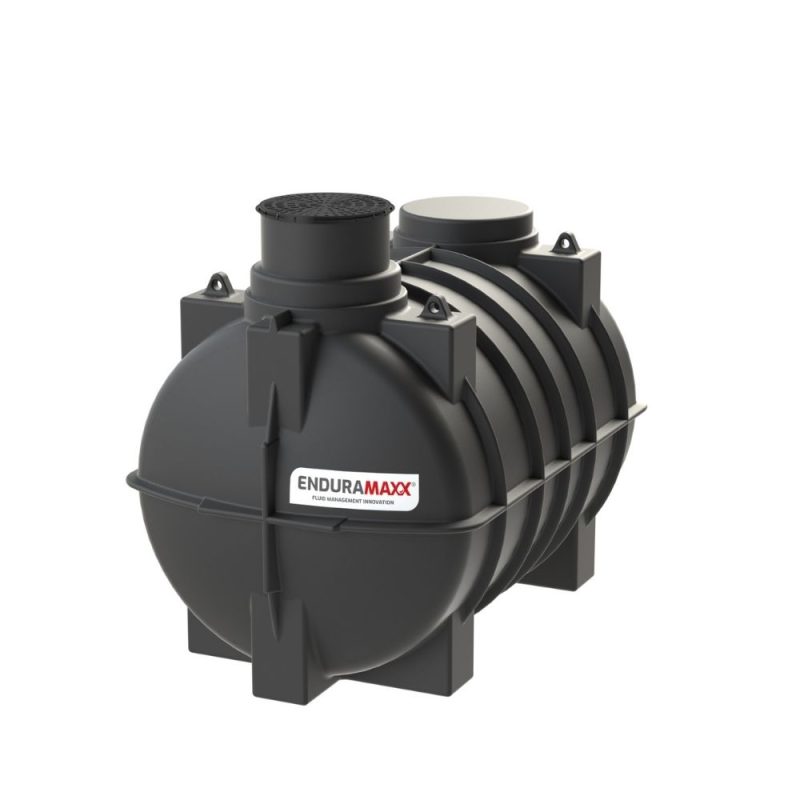
Underground Water Tanks

5000 Litre Underground Water Tank - Potable

Commons Applications: Garden Irrigation, domestic water supply

Typical Features: Thicker walled,  flat sections suited to larger pipework. Inspection hatches.

View Underground Water Tanks

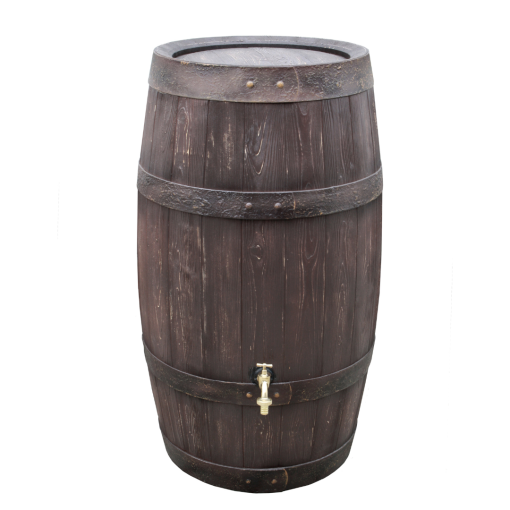
Water Butts

250 Litre Barrique Barrel Effect Water Butt

Commons Applications: Garden Watering, Rainwater Harvesting and irrigation.

Typical Features:  Smaller footprint. Designed for aesthetics as well as function.

View Water Butts

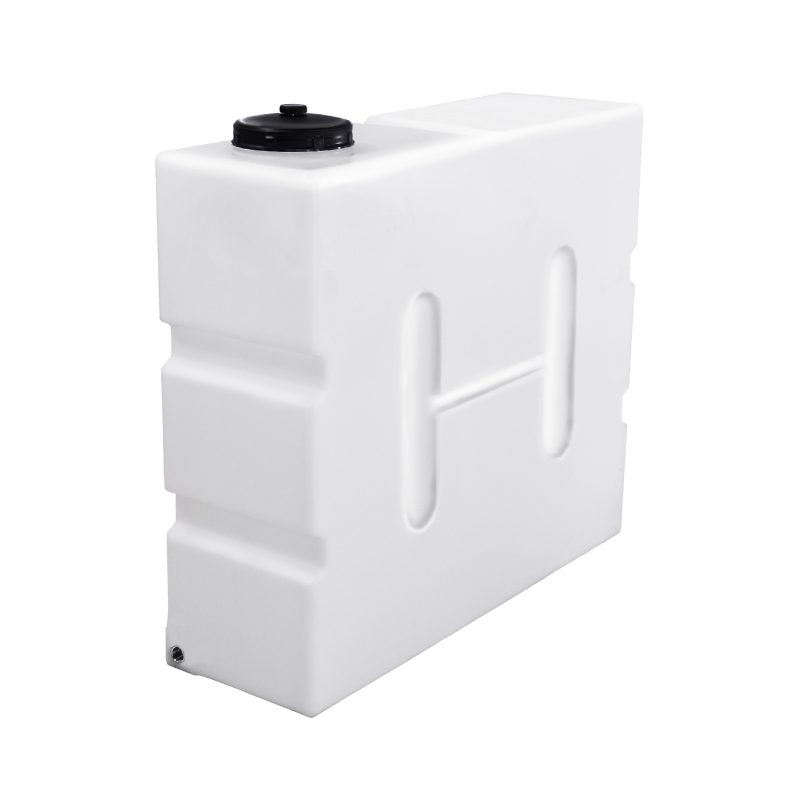
Baffled Water Tanks

460 Litre Upright Baffled Water Tanks

Commons Applications: Transporting water, vehicle use.

Typical Features: Internal walls known as baffles to control water movement when the tank is moving.

View Baffled Water Tanks

Potable Water Tanks

Commons Applications: Drinking Water Storage

Typical Features:  Food-grade material, often natural, black or blue in colour.

View Potable Water Tanks

Conical Tanks

Conical Tank

Commons Applications: Brewing, water treatment, chemical processing, agricultural and industrial mixing

Typical Features: Angled base for complete emptying.

View Conical Tanks

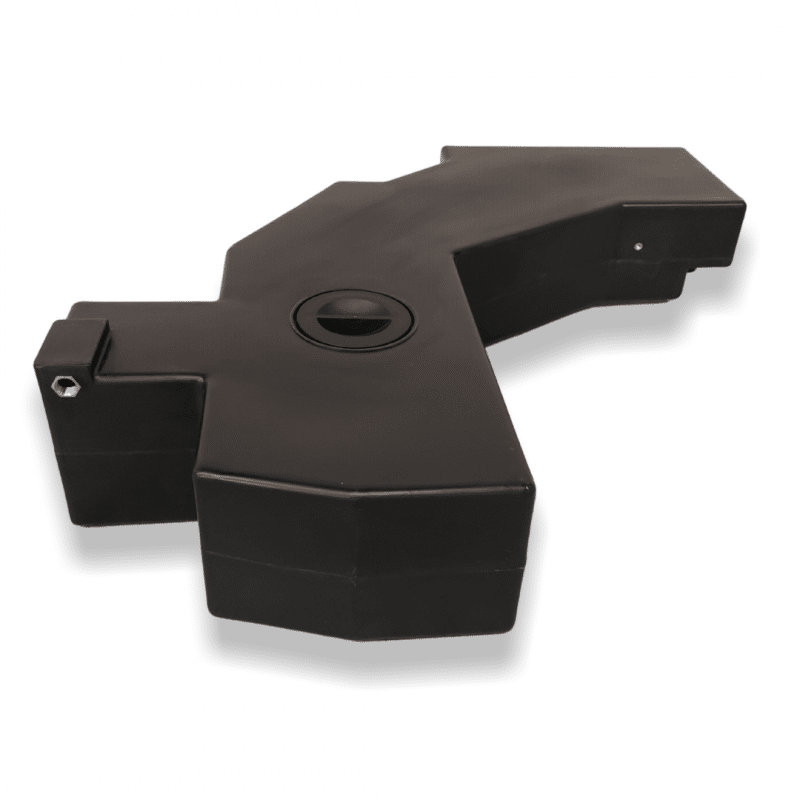
Underslung Water Tanks

Commons Applications: Campervan & Motorhome fresh and waste water supply.

Typical Features:  Additional inlets/outlets, smaller capacities, low profile.

View Underslung Tanks

Rainwater Harvesting

12,000 Litre Rainwater Harvesting Tank

Commons Applications: Irrigation, Garden Watering, Domestic non-drinking uses

Typical Features: Larger capacity tanks. Darker in colour for sustained outdoor use.

View Rainwater Harvesting Tanks

Water tank sizes – choosing the right capacity

The size of water tank you need is dependant on a number of factors and there are no hard and fast rules for the correct choice. The best fit depends on a number of factors including;

  • Amount of water required
  • Space available
  • Whether the water is for drinking
  • If the tank will be transported
  • Consideration of future requirements

Our recommendation would be to choose the largest practical tanks for your available space as it isn’t often a customer wishes they had less water.

Examples of water tank sizes for an application can be found below.

Application Typical Capacity
Small garden 200-500 Litres
Large garden 500-1500 Litres
Mobile Valeting 250-1000 Litres
Agriculture 5,000-30,000 Litres
Rainwater Harvesting 1000-10,000+ Litres
Campervan 40-200 Litres

Water tanks are available in a number of orientations, meaning the dimensions are the same, but the access lid sits on a different side. For example, the 210 litre tank comes in a flat, upright and tower option.

💡Measuring for a water tank

Measure and measure again! On occasion, we have customers who have mismeasured (or not measured at all!) and end up with a tank that does not fit the space they have. Returning a tank can be costly so measuring twice is always recommended. 

It is important to take into account a manufacturing tolerance when measuring – this can be +/- 3%.

View water tanks by size

Potable vs non-potable water tanks

An important consideration when choosing a water tank is whether the stored water will be used for drinking or general purposes. This distinction determines whether you require a potable or non-potable water tank and will influence the type of tank you should purchase.

Potable

Definition: safe or suitable for drinking

Water tanks classed as potable will be manufactured from a plastic that has been approved by the Water Regulations Approval Scheme (WRAS). This plastic will not leach harmful chemicals or nasty odors into the water being stored and has been through thorough testing in order to prove conformity. A potable tank is required in all instances where water is to be used for human consumption.

Examples of industries that require potable tanks;

  • Food Preparation
  • Drinking Water
  • Domestic Supply

Non-potable

Definition: Unsafe to drink or use in food preparation.

Non-potable water covers any use that doesn’t involve drinking water. It doesn’t necessarily mean that is isn’t a ‘good’ plastics but that it is likely not a potable approved material or may have been manufactured from a reused powder. Reused plastic can be defined as old plastic products have been ground down into a powder and repurposed back into the manufacturing process.

Examples of industries that use non-potable tanks:

  • Irrigation
  • Construction
  • Fire Suppression

💡Potable vs WRAS Approved

While the terms are often used interchangeably, they are not always the same. A potable water tank is manufactured from material suitable for storing drinking water, whereas WRAS approval relates to compliance with specific UK water regulations and approved products.

Depending on the application, you may require a potable tank, a WRAS-approved product, or both.

WRAS approval symbol

Water tank terminology

Different manufacturers and suppliers often use different names for the same water tank components, which can make comparing products confusing. The glossary below explains the main parts of a water tank along with the alternative terms commonly used across the industry.

Thread sizes explained (BSP)

What does BSP mean?

BSP stands for British Standard Pipe. This is the standard thread used for most plumbing components including water tank fittings in the UK. It ensures that fittings can be joined together through compatible connections. 

When looking at water tank accessories, you will often see the outlet and inlet sizes referred to as 1/2″ BSP, 3/4″ BSP, 1″ BSP ect. These measurements refer to the thread size and not the actual measured outside diameter of the fitting.

Difference between BSP Male and BSP Female

Across our site and plumbing applications in general, you will see fittings describes as Male BSP and Female BSP.

  • Male BSP (BSPM) has an external thread that screws into another fitting.
  • Female BSP (BSPF) has an internal thread that accepts a male fitting.

As an example. a water tank with a 1″ BSP Female outlet will typically connect to a 1″ BSP Male fitting such as a tap or hose tail

Common BSP Sizes

BSP Size Typical Applications
½” BSP Small taps and hose connections. Standard garden hose size.
¾” BSP Garden irrigation and general water transfer. Common for waste outlets on campervan water tanks. 
1″ BSP Standard water tank outlets for mid-size tanks.
1¼” BSP Higher flow rate applications
1½” BSP Large pumps and commercial installations. Common equivalent size for a campervan filler inlet.
2″ BSP and larger High-flow tanks and industrial systems


Parallel vs Tapered Fittings

Parallel thread fittings (BSPP) seal using a washer, whilst tapered fittings (BSPT) create a seal as the threads tighten together.

The majority of water tank manufacturers will use BSPP parallel threads and this is pretty universal across most water tanks. It is always worth checking whether the fitting is parallel (BSPP) or tapered (BSPT) before installation.

💡Using a tapered thread can cause irreparable damage to the threads so check before installing that the threads are compatible.

Internal vs External Diameter

ID (Internal Diameter) is the measurement across the idside of a fitting or thread, whilst OD (Outside Diameter) is the measurement across the outside of a pipe of threaded fittings, 

💡BSP sizes refer to the thread standard rather than the actual outside diameter of the fitting.

Overflow

An overflow allows excess water to leave the tank once it reaches maximum capacity. This helps to prevent overfilling and reduces the risk of water damage from an excess of water.

An overflow is common on tanks that are filled automatically, for example on rainwater harvesting systems, mains-fed break tanks and livestock water storage tanks. 

Most overflows are installed near the top of the tank and should direct any overflow to a suitable drainage point. Depending on the application, they may also be fitted with an insect screen or rodent guard to prevent pests from entering the tank.

💡An overflow only carries water when the tank is full and is not the same as a tank vent.

Inspection Lid

The inspection lid (also known as an access lid, inspection cap or access hatch) provides access into a water tank, for a number fo different reasons. This includes inspection, cleaning and maintenance through its life.

Depending on the tank, the lid can also be used to install fittings or access equipment that may be inside. 

Examples of uses for the inspection cap;

  • Cleaning and routine maintenance
  • To visually inspect the internal condition
  • Install or service a submersible pump
  • Fit float stiches or level sensors
  • Remove debris or sediment

Most water tanks we supply have a screw or hinged tank lid. Typically, the larger the tank, the larger the access hatch in order to make tank maintenance easier. 

Types of lid;

The type of inspection lid can vary, with options that include;

  • Vented lids – allows air to escape or enter the tank as the water level rises and falls.
  • Plain lid – secure seal, ideal for potable water or tanks being transported.
  • Internal lid – a lid that sits in an internal thread and protrudes into the tank.
  • external lid – a lid that screws onto a neck and protrudes from the top of the tank.
  • Lockable lids – a lid that can be locked

💡The inspection lid should remain closed when not in use to prevent dirt or debris entering the tank.

Nominal Capacity

Nominal capacity is a term to articulate the manufacturer’s stated storage volume of a water tank under normal conditions. For example, a 100 Litre water tank is designed to hold approx. 100 Litres of water. In practise, the amount of usable water varies on a number of variables including;

  • location of the outlet
  • the installation and location of other fittings such as a float valve
  • whether space is left at the top for expansion or overflow.

There is also a manufacturing tolerance to consider. In most cases, this can be +/- 3%. For example, a tank that has a nominal capacity of 100 litres, could actual vary from 97 to 103 Litres due to the manufacturing variables.

💡A tanks nominal capacity can be used for naming the tank and comparison but the actual usable volume can vary slightly depending on how the tank is installed

Common Water Tank Terms

The below table details water tanks terms and other names to which they can be referred. 

Water Tank Term Also referred to as;
Inlet Fill point, fill connection, fill port.
Outlet Drain point, discharge outlet, outlet connection
Bulkhead fitting Tank connector, tank fitting, threaded tank fitting
Lid Inspection lid, inspection cap, access cover, access hatch
Vent Breather, vent fitting, air vent
BSP British Standard Pipe (thread)
ID Internal diameter, inside diameter 
OD Outside diameter, external diameter
Seal Gasket, sealing washer, rubber seal
Hose tail Hose barb, hose connector, hose fitting
Tap Ball valve, gate valve, shut-off valve, isolation valve

Installation requirements

Correct installation is essential for performance, safety and life span of any water tank. Choosing the correct location, base and fittings can help prevent movement, distortion and premature failures.

Positioning

When positioning a water tank, consider the following;

✔ Access for delivery/installation

✔ Access for future maintenance

✔ Proximity to water supply and pipework

✔ Ground conditions

💡Top Tip – Make sure you have sufficient space around the tank for access to the lids, gauges and outlets.

Water Tank Bases

Suitable bases include reinforced concrete, supported paving slabs, compacted hardcore with concrete or a purpose-built tank plinth.

A water tank should always be installed on a:

✔ Flat Surface

✔ Fully supporting base

✔ Level foundation

Avoid:

✕ Uneven ground

✕ Timber sleepers

✕ Point loading

✕ Unsupported slabs

Pipework & Fittings

Most water tanks require;

  • Outlet connection
  • Overflow
  • Ventilation
  • Level gauge
  • Isolation valve

Additional accessories such as pumps, filtration systems and float valves can also be required.

Drinking Water Inspection

If storing drinking water, the inspection requirements should be more consistent and should include

    • Check for any obvious odors
    • Inspect for any discolouration
    • Ensure filters are maintained
    • Clean tank when required

💡Storing and maintaining drinking water needs to be properly controlled. It is always advised to seek professional advise before installing a system yourself.

Water tank maintenance

How to keep your water tank in good condition

Modern, well made water tanks require very little maintenance but a regular inspection schedule will help to ensure lifespan and maintain water quality. Whether the tank is used for garden watering or livestock drinking water, a few simple checks can help to ensure performance is sustained.

How often should a water tank be checked?

  • A visual inspection is recommended monthly for more critical applications.
  • 3-6 months for domestic use
  • After inclement weather

Each water tank will come with its own recommended schedule and warranty to refer to if required. 

💡Never enter a water tank unless it has been professionally risk assessed as it is considered a confined space.

Tank Exterior Checklist

✔ Cracks or obvious damage

✔ Impact damage

✔ Loose fittings

✔ Bulging or distortion

Tank Base Checklist

The tank should remain fully supported across the base.

An uneven base can put pressure on the tank and fittings

Lid, Outlets & Pipework Checklist

✔ Ensure water tank lid remains secure to maintain water quality

✔ Ball valves are able to be operated

✔ Hose fittings are secure

Even small leaks can be costly

Need advice before ordering?

Our experienced team can help you select the best product for your application.

Click me!

Browse Products

Still deciding? View our full range of tanks and accessories here.

Click me!

Request A Quote

Need delivery pricing or a bespoke solution? Fill out our simple form.

Click me!