



4800 Litre Silage Effluent Tank – GRAF Carat
Product code
From £1,262.50 Exc VAT (£1,515.00 Inc VAT)
Product Description
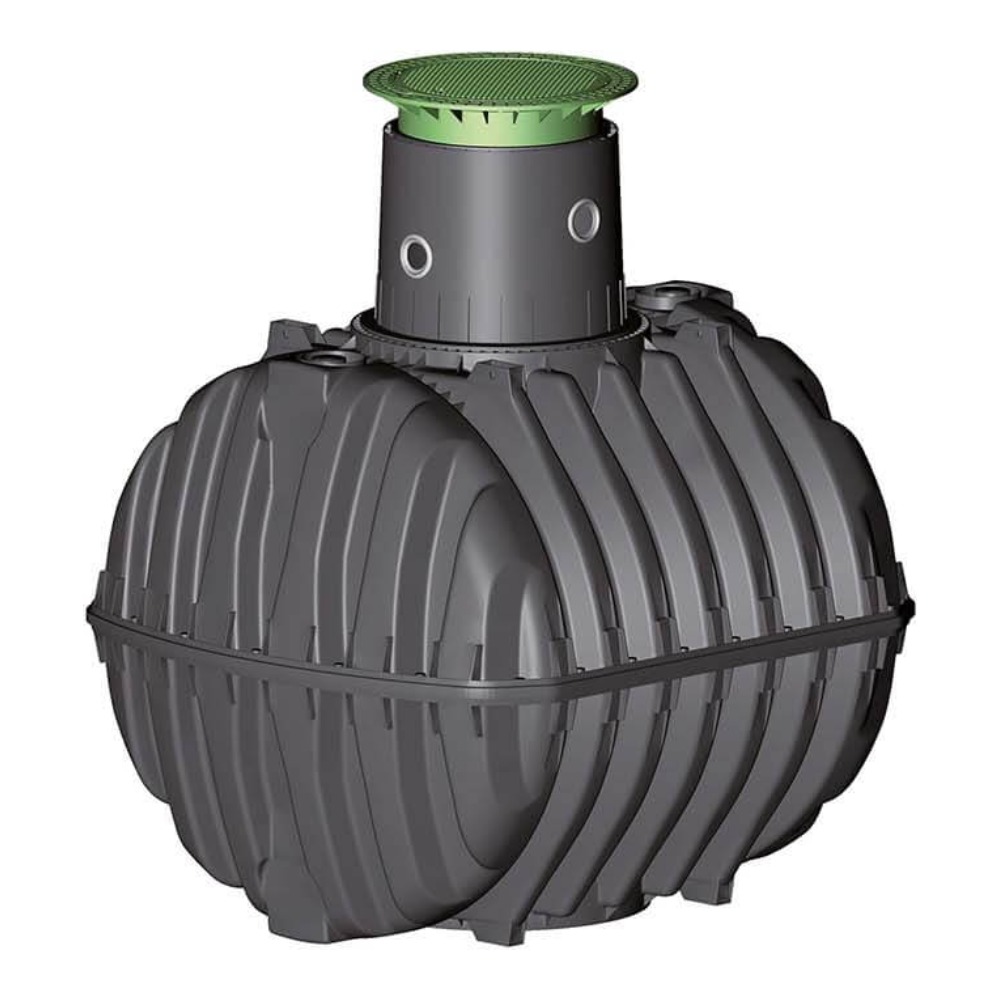
The 4800 Litre Silage Effluent Tank from GRAF suits a modest clamp on a beef, sheep or mixed farm. Its compact footprint makes it easy to place beside the clamp drain with a short, simple pipe run.
Silage effluent is highly polluting and acidic, so it must be collected in a sealed tank rather than allowed to soak away. The 4800 litre silage effluent tank is made from tough polyethylene that resists the acid in silage liquor, and it can also be used for dirty water from yards and parlours.
Key Features
- 4,800 litre capacity (approx. 1,056 gallons)
- Sealed tank for silage effluent, slurry and dirty water
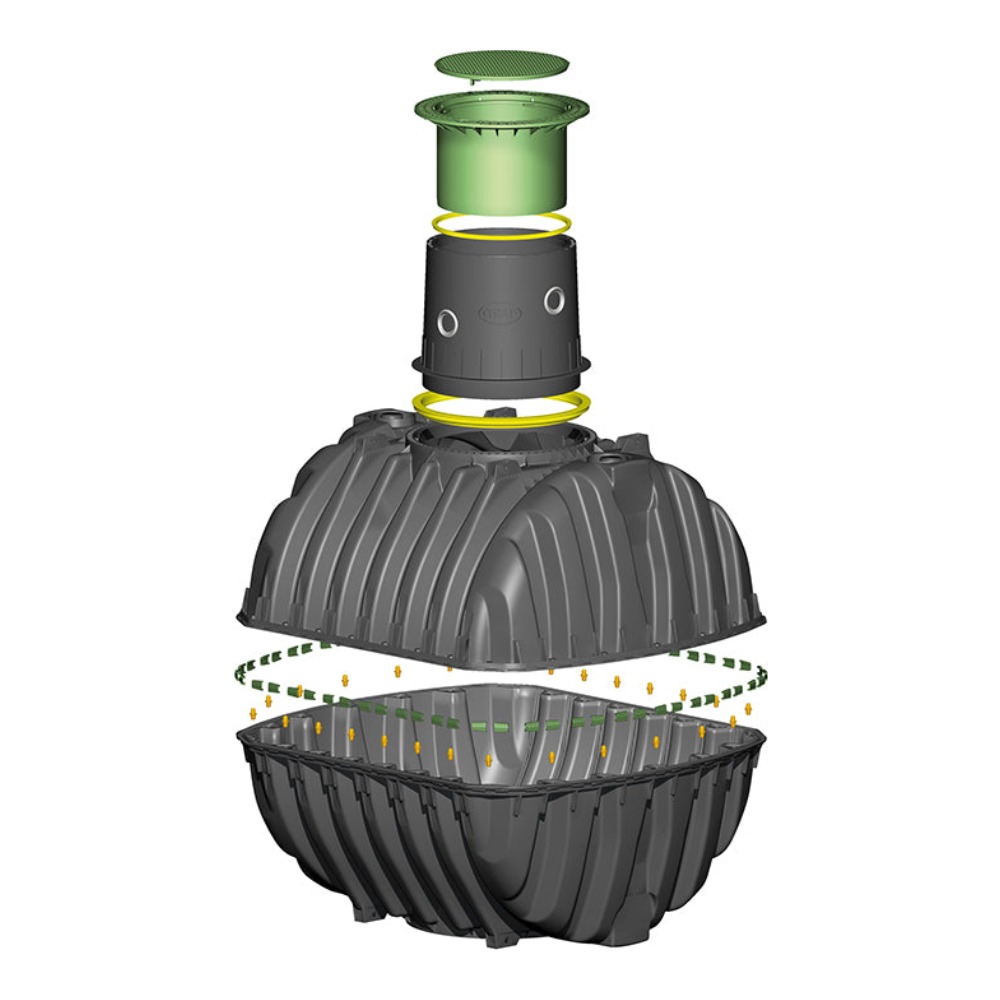
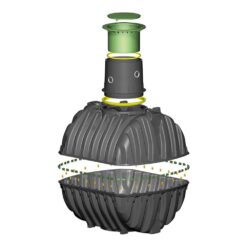
- Tough, lightweight GRAF Carat polyethylene construction
- Polyethylene will not corrode in acidic silage liquor
- Maxi telescopic dome shaft with 150kg pedestrian lid as standard
- Optional 3.5 tonne traffic lid for yards and tractor routes
- 15 year manufacturer warranty and 50 year design life
Sizing a 4800 Litre Silage Effluent Tank
In England, SSAFO rules ask for at least 20 litres of effluent tank capacity for each cubic metre of silo, up to 1,500 cubic metres. On that basis a 4800 litre silage effluent tank covers a silo of up to around 240 cubic metres.
Scotland, Wales and Northern Ireland have similar rules, and below-ground tanks must stay watertight for at least 20 years. Speak to us if you need the manufacturer paperwork for the Environment Agency or your local regulator.
Specification
- Capacity: 4,800 litres
- Tank type: GRAF Carat
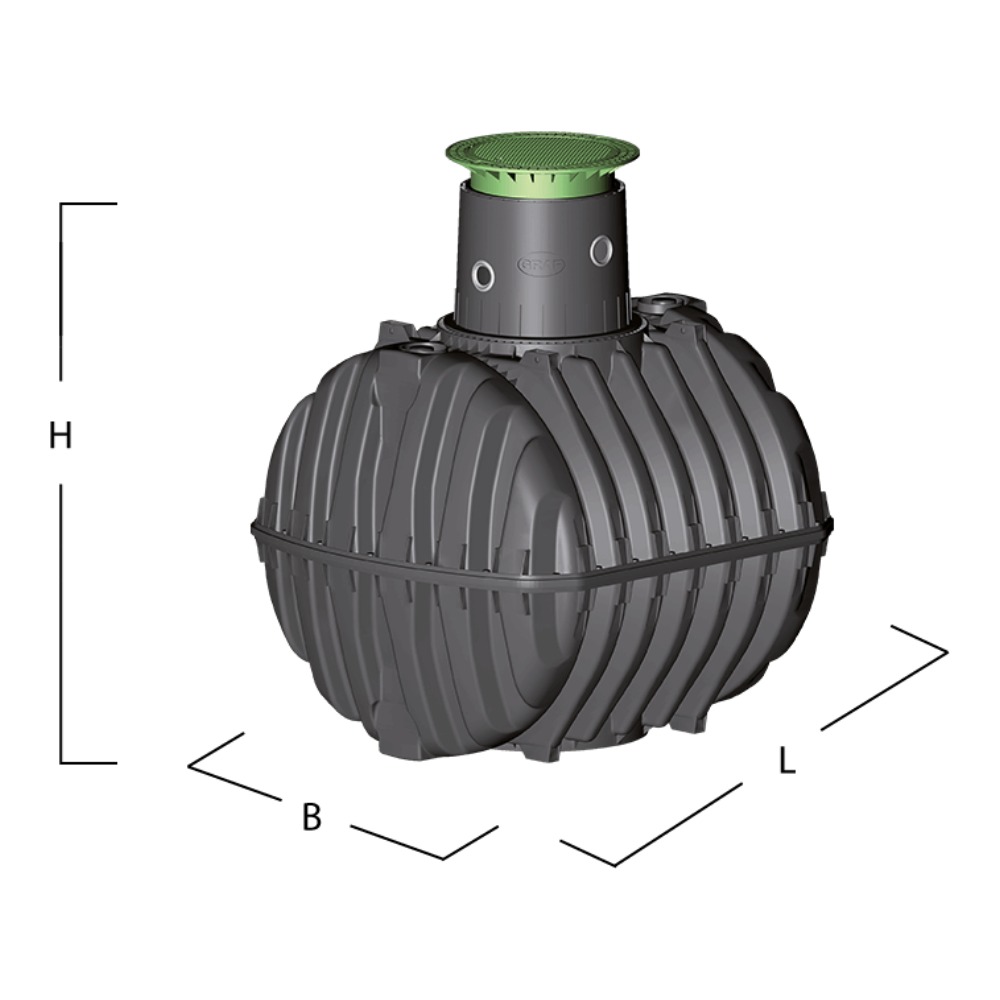
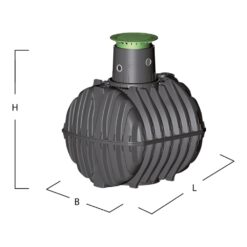
- Tank dimensions: 2280 x 1985 x 1820 mm (L x W x H, before dome shaft)
- Weight: 185 kg
- Colour: Grey / black
- Loading: Pedestrian as standard, vehicle with traffic lid
- Manufacturer: GRAF UK
Optional Extras
- Traffic Telescopic Lid 3.5 Tonne, for yards and areas with vehicle traffic
- Tank Alert EZ High Level Alarm, which sounds when the tank is nearly full so you can empty it before it overflows
Delivery
We deliver free to UK mainland addresses. The tank arrives on a lorry, so you will need a way to offload it on the day. You can download the drawing and installation guide from this page.
Delivery and Returns
Delivery Information
Shipping costs for standard postcodes within UK Mainland are calculated at checkout when a postcode is entered.
Delivery charges are based on current manufacturer and courier rates. In some cases, delivery costs may be subject to confirmation after an order has been placed due to supplier delivery zones or freight changes. If an additional delivery charge applies, the customer will be notified before the order is dispatched and given the option to proceed or cancel the order for a full refund.
Some areas may incur additional charges, including:
-
Scottish Highlands and Islands
-
Isle of Wight, Channel Islands, Isle of Man, Anglesey, Western Isles, Shetland Islands, Orkney Islands, Isles of Scilly
-
Northern Ireland
-
Republic of Ireland
Additional charges may apply for postcodes in these areas:
AB, BT, CA, CT, DD, DG, EH, FK, G, GY, IM, IV, JE, KA, KW, KY, LD, LL, ML, PA, PH, PO 30–41, SA, SY, TD, TN, TR, ZE
If your postcode is listed above, please contact us before ordering for a shipping quote.
Some products are only available for delivery within England & Wales; this will be stated on the product page. If you are outside this area, please contact us for a quotation.
Delivery Lead Times
-
Refer to individual product pages for expected delivery times.
-
Custom orders may take longer; please enquire before ordering.
-
Items on the same order may be delivered separately due to stock locations.
-
If delivery is delayed, we will notify you via email.
Delivery Method
-
All deliveries are kerbside unless stated otherwise.
-
For larger items, customer offloading may be required.
-
Someone must be available to receive and inspect the goods.
-
Goods may be left in a safe place at the customer’s risk; Online Tank Store cannot accept responsibility once goods are left.
Note: By signing for the goods, you confirm that the outer packaging is intact and free from visible damage. Any visible damage must be noted on the delivery paperwork or the delivery refused.
Scheduled delivery times may be accommodated; please add instructions in the Customer Notes section at checkout.
Missing or Faulty Items
If items are missing or arrive damaged:
-
Contact us within 48 hours of delivery at [email protected]
-
Provide:
-
Order number
-
Photos of the goods
-
Brief description of the issue
-
We may require images for the manufacturer to provide replacements.
Delivery Charges & Returns
-
Ensure the product is the correct size and suitable for your intended use.
-
Standard tanks (no customisation) are returnable but subject to a restocking charge and must be returned in A1 condition. Returns may be expensive due to size and weight; please check before ordering.
-
Failed delivery attempts: After one unsuccessful delivery attempt, items will be returned to the depot, and redelivery charges may apply.
-
Special or custom tanks are non-returnable. If the wrong product is ordered or the item is no longer required, it cannot be returned, and no refund will be issued.
Returns & Refunds
Our full returns and refund policy can be found by clicking here.
It is important to us that the items you order are correct for your needs however, we understand that situations and requirements can change. It can be costly to return an order so please ensure you are certain of your requirements before you order and that you have read the returns policy above for details.
Custom Tank – An order is considered ‘custom’ when a non-standard configuration or colour is requested. Custom orders are not eligible for return so please ensure the product is what you require before ordering. By purchasing, you are agreeing to the above terms.